What does it cost to reseal imprinted concrete?
6 min read Concrete Revive
The honest answer is that it depends on whether your colour is intact — and that changes the job from maintenance into something considerably bigger.
We will not publish a price list, because the same drive can need two very different jobs and only looking at it tells you which. What we can do is set out what moves the number, so you can read a quote properly and spot the ones that will grow once work starts.
The question that decides everything
Before anything else: is the colour still there?
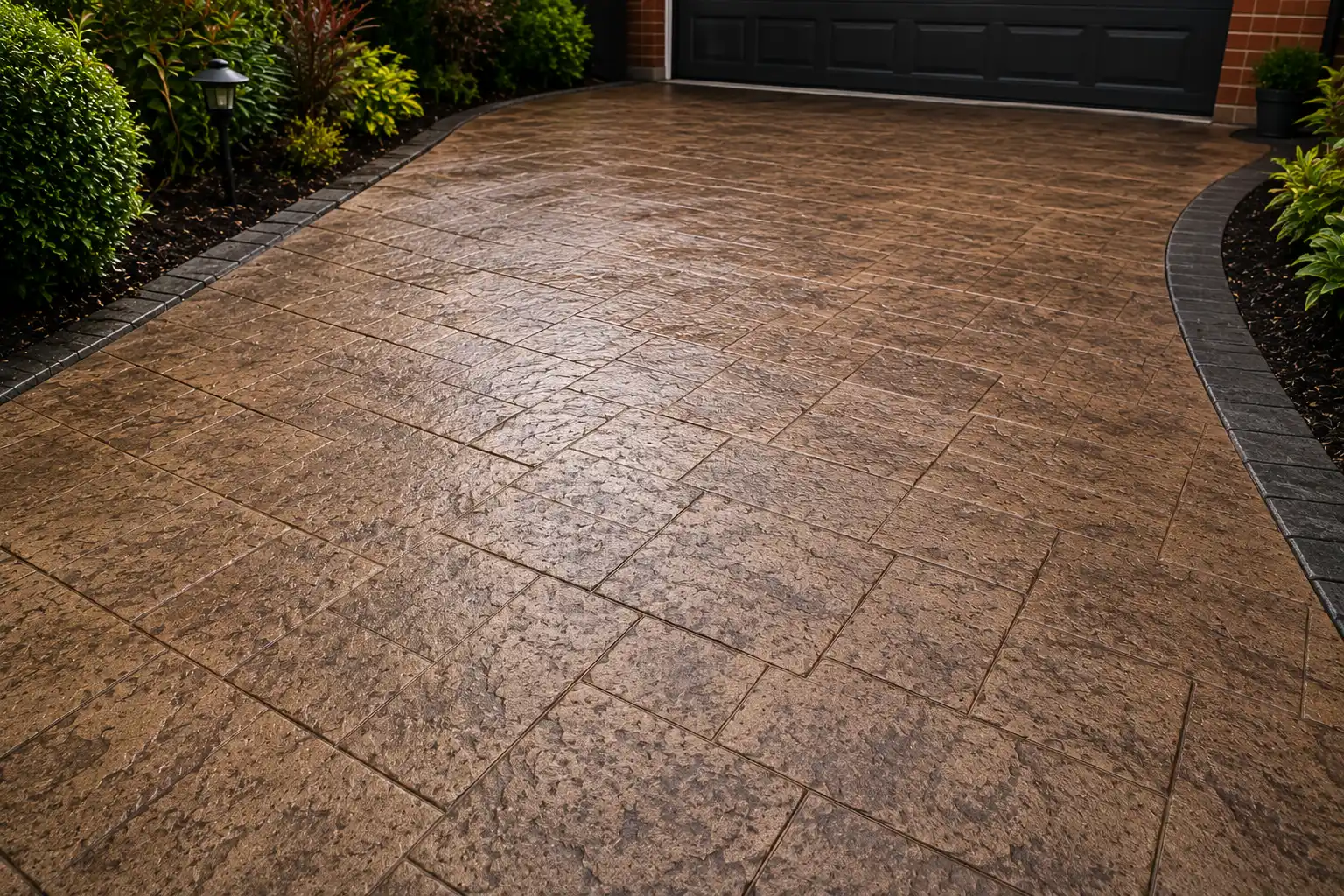
Pour clean water on a dull patch. If the colour jumps back while wet, the pigment is intact and you need a clean and reseal — the routine job. If it stays pale even when wet, the colour hardener has been worn through, and that needs recolouring: a pigmented system applied to rebuild colour before sealing. Considerably more work, considerably more cost.
Anyone quoting without doing that check is guessing.
What else moves the price
Area and access
Larger drives cost less per square metre. Awkward access, steps, tight gates and nowhere to set up all add time.
How much organic growth there is
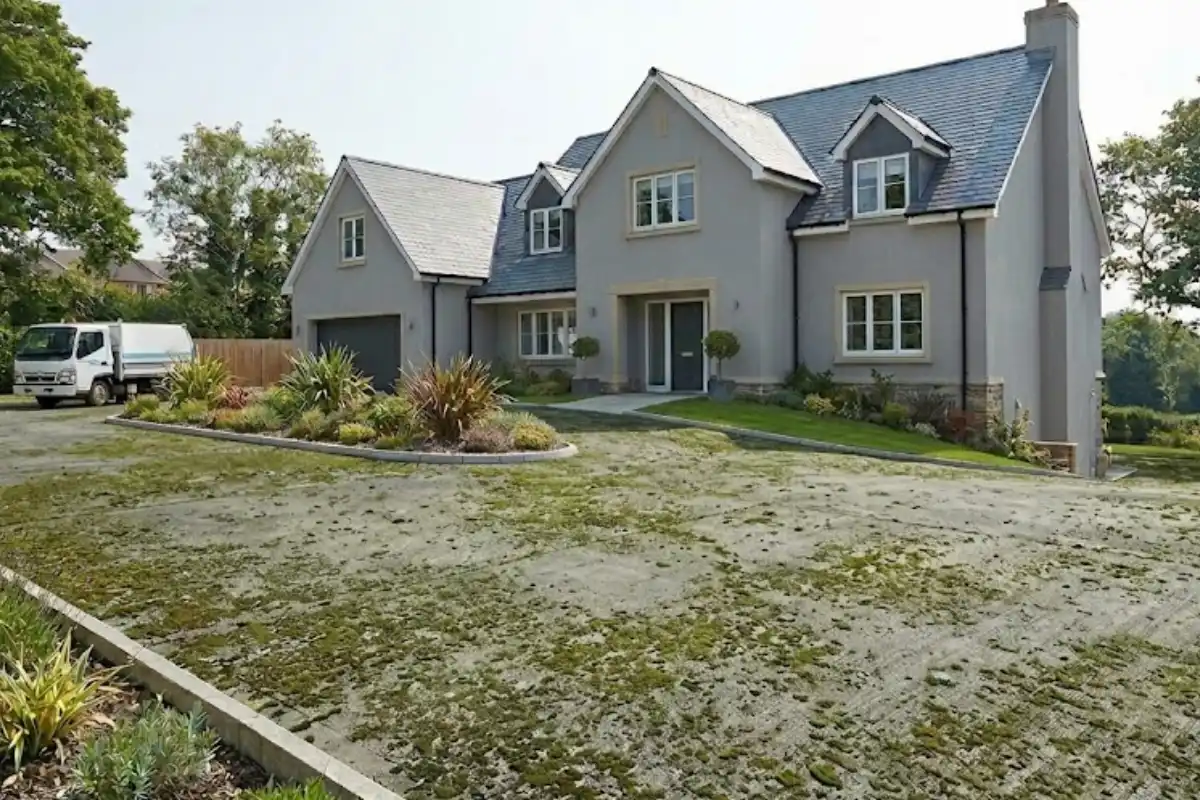
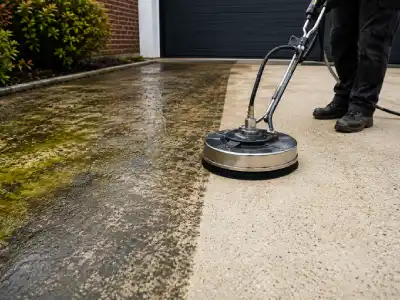
Surface algae rinses off. Established black spot is a different matter — it needs treatment, dwell time and often a second application. Black spot is the single most underestimated item on imprinted concrete.
Whether there is cracking to make good
Fine surface cracks can be filled as part of the job. Structural cracking that runs through the slab is a repair, and no amount of sealer addresses it.
Drying time
This is the one people do not expect. The surface must be genuinely dry before sealing, so cleaning and sealing are usually separate visits. Anyone offering to clean and seal the same day, in this climate, is taking a risk with your drive — sealing over trapped moisture is exactly what produces a cloudy white finish.
The finish you want
Matt, satin or wet-look gloss. An anti-slip additive should be part of any surface you walk on and adds little.
Comparing quotes properly
Compare what is included, not the headline figure. A quote that covers a biocide treatment, proper drying time, crack filling and an anti-slip additive is not comparable to one that is a wash and a coat of sealer.
Questions worth asking:
- Have you checked whether my colour hardener is intact?
- Is black spot treatment included, and is it a separate application?
- How long between cleaning and sealing?
- How many coats of sealer, and is an anti-slip additive included?
- What happens if it rains?
The cost of not doing it
This is where the real money is. The sealer is sacrificial and lasts three to five years here. While it is intact, the concrete beneath is protected and good for decades. Once it has gone, water gets into the surface, freezes, and lifts the top layer away — taking the colour hardener with it.
At that point you are no longer choosing between a reseal and doing nothing. You are choosing between recolouring and replacement, and both are in a different bracket entirely. Resealing on a sensible cycle is the cheapest thing you will ever do to an imprinted concrete drive.
Our assessments are free. If your drive does not need doing yet, we will tell you that.
Common questions
- Why can nobody quote over the phone?
- Because the job depends on whether the colour hardener is intact, which needs checking on site. A reseal and a recolour are very different pieces of work.
- Can cleaning and sealing be done on the same day?
- Rarely, in this climate. The surface must be thoroughly dry first — sealing over trapped moisture causes the cloudy white finish that then has to be stripped back.
- Is resealing cheaper than replacing the drive?
- Dramatically. Resealing is routine maintenance that keeps water out of a slab that is otherwise good for decades.