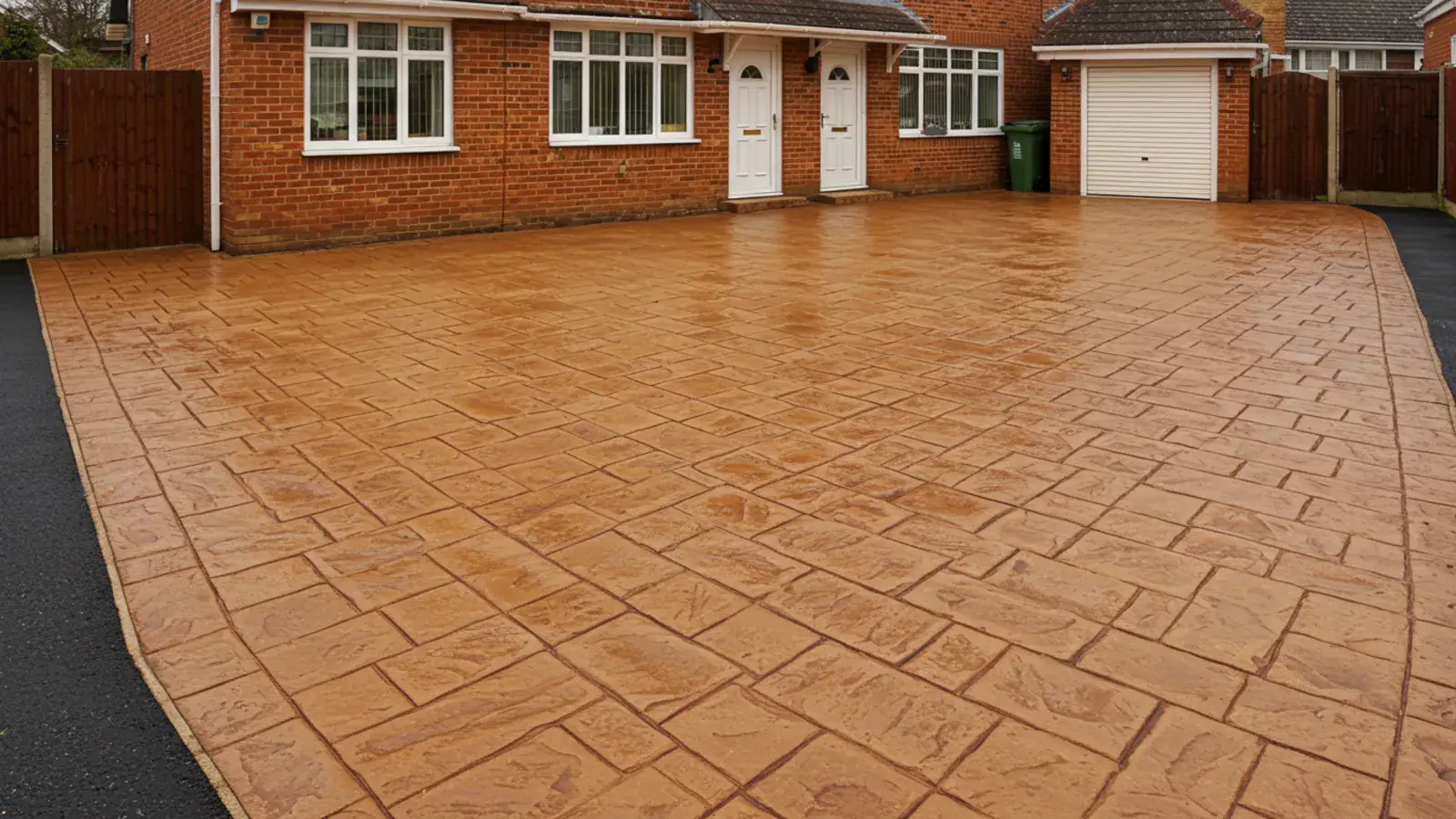
Imprinted concrete restoration in Leeds
Cleaning, resealing and recolouring for pattern imprinted concrete driveways right across the LS postcodes.
Get a free Leeds quoteThere is a particular vintage of Leeds driveway that we see constantly: pattern imprinted concrete, laid somewhere between the late nineties and the mid two-thousands, still perfectly sound underfoot but a shadow of the colour it started with. Across Garforth, Morley, Pudsey and the estates around the outer ring road, there are thousands of them. Nearly all can be brought back.
Why so much of Leeds has imprinted concrete
Imprinted concrete arrived just as Leeds was building hard on its outskirts. It gave a seamless, patterned finish for less than natural stone, it went down quickly, and it suited the wide, regular frontages of the new estates going up around Alwoodley, Colton and Rothwell. For a decade it was the default upgrade from tarmac.
What was not always explained is that the sealer on top is sacrificial. The concrete lasts decades; the sealer lasts three to five years in this climate. A great many Leeds drives have never been resealed since the day they were poured, which is precisely why they now look tired.
The colour is usually still there
Imprinted concrete takes its colour from a dry shake hardener and a release agent worked into the surface while the slab was wet. Both sit in the top few millimetres and neither washes away. What gives the drive its richness is the sealer over the top — and when that wears off, the same pigment reads as pale and chalky.
There is a simple test you can do yourself. Pour clean water on a dull patch. If the colour jumps back while it is wet, nothing has been lost and a clean and reseal will restore it. If it stays pale even when wet, the hardener has been worn through — usually by repeated high-pressure washing — and that needs recolouring instead.
Leeds weather and what it does
Sitting in the Aire valley, Leeds gives imprinted concrete a hard time. Long damp spells encourage algae and black spot, particularly on north-facing drives and the shaded strips beside a house or hedge. More seriously, once the sealer has gone, water soaks into the surface, freezes, and lifts the top layer away. Frost damage on imprinted concrete is almost always an unsealed-surface problem rather than a fault with the slab.
That is the real argument for resealing on a cycle: not appearance, but keeping water out of a surface that is otherwise good for decades.
How we work across the LS postcodes
We clean at a pressure matched to imprinted concrete rather than the maximum the machine will produce, treat any moss, algae or black spot so it cannot grow back through the new sealer, make good any cracking, and then let the surface dry properly before anything is applied. That drying step is the one most often rushed, and sealing over trapped moisture is what leaves a drive looking cloudy and white.
Where the colour has genuinely gone, recolouring rebuilds it with a pigmented system before sealing. It costs more than a reseal and far less than replacing the slab. Either way, we will tell you which one you actually need — assessments across Leeds are free and carry no obligation.
Common questions
- Which parts of Leeds do you cover?
- The full LS postcode area — Roundhay, Moortown, Horsforth, Garforth, Morley, Pudsey, Wetherby and everywhere between.
- My Leeds drive has faded badly. Can it be saved?
- Almost certainly. Splash water on it: if the colour comes back while wet, the pigment is intact and a clean and reseal will restore it. Only worn-through colour hardener needs recolouring.
- How long does imprinted concrete sealing take?
- Cleaning is usually a day. The surface then has to dry completely before sealing, so the seal is normally applied on a separate visit — sealing damp concrete is what causes a cloudy white finish.
Bring your Leeds driveway back
Book a free, no-obligation assessment and we will tell you honestly whether it needs a reseal or a recolour.
Request your free quote